
ANN ARBOR, MI — Khalil Peaks has been with Ann Arbor’s African American Festival since the beginning.
“When I started my business back in the ’70s, and when this festival started, I enjoyed coming up here because I could reminisce about when I was going to school,” Peaks said.
In the 1960s, when Peaks studied at the University of Michigan, he would get his hair cut at a barbershop at Fourth Avenue and Ann Street, where he said the Black community hung out.
“This is a famous area back in the day. They used to have a pool room and a barber shop,” Peaks said.
Now, the Black-owned businesses have been pushed out. But, Peaks and other vendors come back once a year to set up tents and celebrate Ann Arbor’s Black heritage at the African American Festival.
Community leader Lucille Porter started the festival 28 years ago, in 1997. Now, Teesha Montague organizes the day-long event. She uses it as a way to educate the community about Ann Arbor’s Black history.
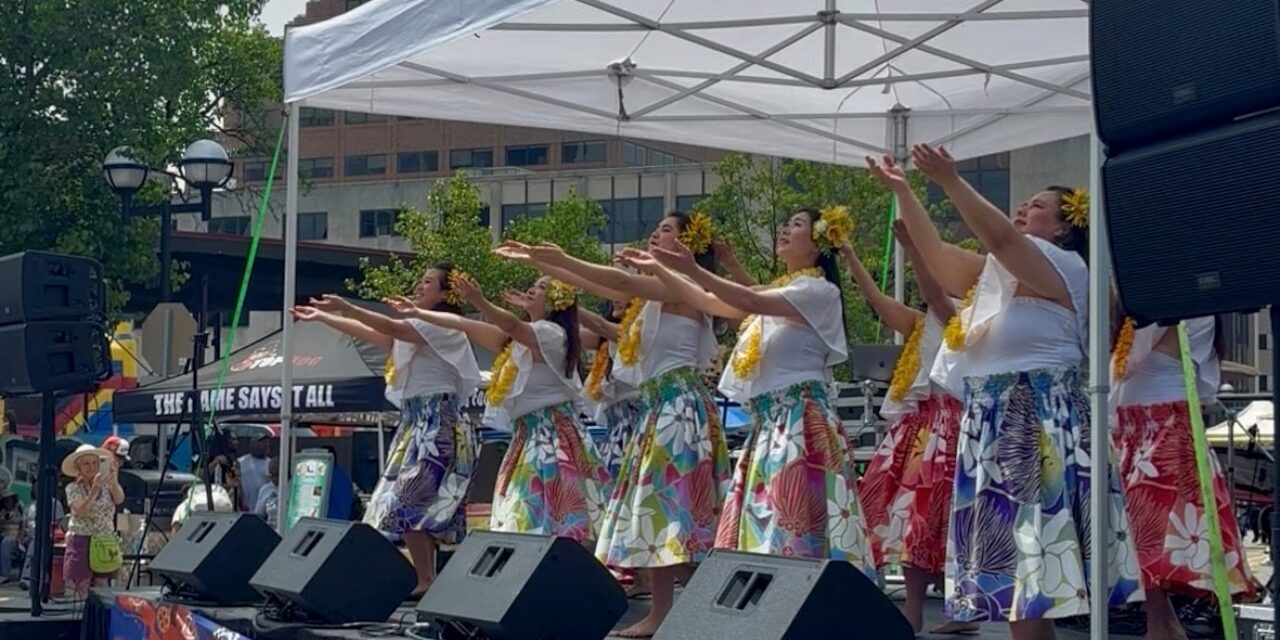
Tents displaying handmade jewelry, colorful dresses and custom prints lined Ann Street and Fourth Avenue. Performers filled the air with music, and food trucks emitted a subtle sweet smell of lemonade and barbeque.
Peaks’ tent displayed hundreds of earrings, rings and beaded bracelets. He makes some of the jewelry as part of his business “Naim’s Unique Designs.” If it’s not made in Michigan it’s made in Kenya or South America.
“It’s kind of sentimental for me, too,” Peaks said. “Some of the people that I know that are my age, they remember the same people that I remember, so it’s kind of like a reunion.”
Other tents, such as Mamady Sidibe’s “Culture | Culture,” sold African ethnic art and accessories as well.
And new vendors have emerged as the festival expanded. It was Danielle Boyd’s first time at the festival, with her natural beauty company “Be Lovely Beauty,” and the festival includes youth vendors to help grow the community.
But, some tents weren’t there to sell at all. Willis C Patterson’s “Our Own Thing Chorale and Instructional Program“ was there to collect donations and help support young African American musicians.
“You notice that, especially in middle school and high school, there are fewer kids of color, especially students of color (in instrumental and vocal ensembles),” Chorale President Sharon Vaughters said.
The program teaches lessons and helps supply instruments to people who can’t afford to rent them. The chorale was one of the older Black-owned organizations at the festival, and Vaughters echoed Peaks’ feeling that the festival was a sort of reunion. Last year, she said, a reunion featured Jones school, an elementary school and an anchor in Ann Arbor’s historically Black neighborhood.
The festival also serves as a way to reflect on community growth and strength. Peaks said the African American festival is a lot bigger than it used to be, and he hopes it will continue to expand. One day, he wants the festival to be two days instead of one. But he’s glad for the memorable location.
“For people who are from Ann Arbor, raised in Ann Arbor, they can remember back when this area was completely different,” Peaks said. “Now it’s transformed into a booming business area. So, I’m glad that they let (us) have the festival in this area.”
Want more Ann Arbor-area news? Bookmark the local Ann Arbor news page or sign up for the free “3@3 Ann Arbor” daily newsletter.
If you purchase a product or register for an account through a link on our site, we may receive compensation. By using this site, you consent to our User Agreement and agree that your clicks, interactions, and personal information may be collected, recorded, and/or stored by us and social media and other third-party partners in accordance with our Privacy Policy.