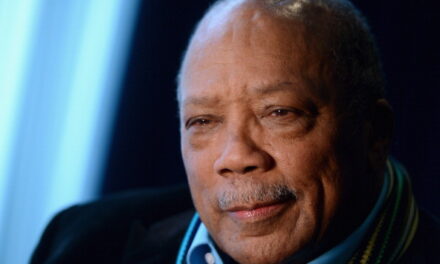

Before Dennis Barlow ever cast a vote on grading scales, dress codes or Confederate school names as a member of the Shenandoah County School Board, he had to adjust to something more basic: the lack of guardrails.
“In diplomacy and military life there were usually a set of parameters and rules that kept us all in line,” said Barlow, a retired Army colonel and outgoing chairman of the school board. “Locally, there’s no-holds-barred. It can go any direction.”
He paused, then reached for an image that seemed to surprise even him.
“It was like Yosemite Sam putting the torch in the fireworks bin — it all goes everywhere,” he said, referring to the hot-tempered Looney Tunes gunslinger.
Barlow’s four-year term on the board ended Wednesday, including two years as chairman. He represented District 1 at the southern end of the county and did not seek reelection.
During his tenure, the board tightened attendance enforcement, approved a division-wide cellphone ban that took effect Oct. 28, 2024 — ahead of Virginia’s Jan. 1, 2025 deadline — and rewrote the division’s library materials policy after months of rancor. The board also voted to restore school names honoring Confederate leaders that had been removed in 2020, a reversal that drew international media attention and a federal lawsuit from the Virginia State Conference of the NAACP.
In his wake, quantifiable gains and headline controversies sit side by side. At Ashby-Lee Elementary, Principal Holly Stone told the board in October that the school’s top repeat offenders logged seven discipline incidents each through the first quarter, down from 18 at the same point last year. Superintendent Melody Sheppard said preliminary state data presented in June showed the school’s chronic absenteeism measure dropping from 17.5% last year (after recovery adjustments) to 11.5% this year (before those adjustments are applied). At the other end of the division, all three county high schools earned “Distinguished” ratings under Virginia’s School Performance and Support Framework. Division officials said the scores placed them in the top 10% of high schools statewide.
All this as the school-renaming fight continues to divide the county.
That tension surfaced at the board’s Dec. 11 meeting as Sheppard presented the high school results. Barlow, due back in court the next morning, quipped: “Maybe I should take a placard to court tomorrow and hold that up. I’d like to get something across.”
Barlow insists the story of his time in office is not a single vote or a single fight. He describes it as a struggle to keep the system focused — away from what he calls partisan signaling and performative outrage — but on what he calls the “one golden rule”: educating kids.
Hull defilade
Barlow took office at the start of 2022, when the school system was still dealing with COVID’s aftershocks and the lingering bitterness of the 2020 renaming fight. That board had renamed Stonewall Jackson High School to Mountain View High School and Ashby-Lee Elementary to Honey Run Elementary as the nation grappled with racial issues.
What stayed with him most, he said, was not masks or quarantines but what he saw as a kind of social withdrawal among students.
“One of the things that shocked me most had been the general inability of our students to be able to engage in discussion or to dialogue with each other,” he said. “It seemed like our students had gone into this kind of position where they didn’t want to talk in class, they didn’t want to talk to each other, they were afraid to share views because they’d be criticized.”
To describe it, he reached back to armored warfare — one of several times his answers slipped into military shorthand.
“It seems like you get a tank, you dig deeper for protection. You don’t come out, you stay down deeper. As we in the military would say, they go into hull defilade,” he said — tucked down behind cover, out of view. “I think we’ve kind of pushed our kids into that framework.”
He was elected in November 2021 as part of a conservative shift on the board, “a backlash,” he called it, though he argues his core concern was academic and cultural: restoring a sense that school is serious, and that students can disagree without fear.
“I’m conservative, but I didn’t run because I was a conservative,” he said. “I felt that we were shortchanging our kids academically.”
Early in his term, the board revised grading practices, ending a “50% floor” approach and returning to the idea that students start at zero.
“We said no, no, no — a kid starts at zero and you move up,” he said. “You don’t start at 50%.”
The division also reworked pacing guides that Barlow described as “cookbookish,” a style of instruction he believed produced “teach-the-test” classrooms and lowered expectations.
“If you set low expectations the students will immediately drive down to the lower expectations,” he said. “So that was my mantra: Raise expectations.”
Then came the moves that made some residents nod and others roll their eyes: stricter attendance enforcement, a back-to-basics approach to classroom discipline, and tighter dress-code language that drew ridicule from some after public discussion of students wearing animal ears and tails.
Critics mocked the fixation. Barlow did not.
“If I’m going in there to discuss the Spanish Armada, I don’t want to look around and see a kid with floppy ears and a tail whipping around,” he said. “Give me a break.”
To him, these were not separate battles. They were all variations on one theme: establish the classroom as a neutral zone, where attention is not constantly pulled away — by devices, by distractions or by politics leaking into student life.
“We didn’t want an ideological culture war going on using the kids as the target audience,” he said, describing the board’s policy restricting classroom displays to official or school-related imagery. “Teachers couldn’t send little — they weren’t very subtle — signals that this is my set of beliefs.”
The 17 chops
Ask Barlow what he is proudest of, and he does not start with grading or discipline. He starts with a policy that took longer, required more patience, and, in his view, did something uncommon in modern school politics: it cooled the temperature.
The county’s library materials fight had been building for years. One side was alarmed by the possibility of sexually explicit or ideologically charged content in school libraries; the other warned against censorship and moral panic. When the board tackled it, the mistrust was thick.
“This went all the way from parental concern to academic freedom of students who want to take anything they want out,” he said.
Barlow’s instinct was procedural. He talked about the work the way an officer talks about paperwork that has consequences.
He learned that instinct in the Pentagon, he said. In the Army, he explained, he had to “run packages” — complex proposals that required a gauntlet of approvals before anything could move.
“A package would be a deployment of the 7th Division to invade Panama, for instance. I had to run that,” he said. “I had to get 17 ‘chops’ — sign-offs from different offices — before I could go forward with it.”
He approached the policy on selecting library materials the same way. For roughly 14 months, the board met with librarians and staff and parents; the first meeting was so tense he joked he left needing “Band-Aids and antiseptic.” But the slow grind, he said, taught him something: librarians were not the caricatures some residents imagined, and parents were not all zealots.
The final system created multiple layers of review and appeal, an attempt to ensure that challenges were handled through process rather than through public blowups.
“No one segment is overburdened with it,” Barlow said.
In a board term defined publicly by conflict, Barlow describes the library policy as proof that conflict does not have to end in bitterness. It can end in a system.
The renaming fight
No decision drew more attention — or more division — than the vote on school names.
In May 2024, the board voted 5–1 to restore the names of Stonewall Jackson High School and Ashby-Lee Elementary School, reversing changes made in 2020 after the division moved away from honoring Confederate leaders. In a federal lawsuit filed by the Virginia State Conference of the NAACP and student plaintiffs, they argue the restored names carry an exclusionary message and elevate men who fought to preserve slavery. The complaint situates the Stonewall Jackson name in the Jim Crow/Massive Resistance period: it says the county built new schools intended for White students after Brown v. Board, cites a 1960 school yearbook, and notes the high school did not enroll its first Black students until the 1963–64 school year. Ashby-Lee, by contrast, was not named until 1975.
Supporters of restoring the names framed the 2020 changes as a moment of national panic and political pressure. Barlow argues the county’s heritage and history were brushed aside. In the lawsuit, the Virginia NAACP and student plaintiffs argue restoring the names honors men who fought to keep Black people enslaved, and that the original naming — tied to the segregation era — carried its own message about belonging.
After the 2020 vote, opponents of the renaming protested and argued the board moved with insufficient public notice and a rushed process during the pandemic — a procedural critique Barlow says still underlies his view that the renaming was “unethical.”
Barlow insists he did not campaign on the promise to restore the Confederate names. But he says he quickly learned the subject was unavoidable.
He recalls going door-to-door expecting to talk about academics, only to have residents return again and again to the same grievance: how the names were removed and who got to decide. He estimated that 90 percent of District 1 voters he talked to during his campaign listed it among their top concerns.
“There is a historical and regional position which was brushed aside brusquely by those who were against the traditional names,” Barlow said.
The 2024 vote set off a new wave of international coverage and local division. Supporters raised private money to cover the costs of replacing signage for the renamings. Not long after the vote, the Virginia NAACP filed a federal lawsuit seeking to block the restored names. Testimony concluded last week; the case now moves through additional briefing before the parties return to court March 31 for closing arguments, after which the judge will rule.
With the decision still pending, Barlow has been careful about what he says. During the interview, when asked how an African American family might perceive a school named for Robert E. Lee, he declined to answer, citing the ongoing litigation — but later expanded in follow-up after testimony concluded.
What he would say repeatedly is that he believes the school’s day-to-day reality does not match the charge the plaintiffs and other opponents make about what the name signifies.
“You walk through the school there, and you see Hispanic kids and kids who are of Arab descent, see people who have been here three generations and they’re all cheering each other on,” Barlow said. “Stonewall Jackson is one of the healthiest schools I’ve ever seen in terms of camaraderie, school spirit and academic achievement. I’ve never heard anybody at Stonewall say, ‘It’s too bad that kid’s Latino,’ or ‘too bad that kid’s Black.’ I’ve never heard anything like that in my life.”
In follow-up after testimony concluded, Barlow expanded on what he sees as the dispute’s core.
For Barlow, that “healthy school” claim is not just pride or optics. He argues it’s evidence the name is not operating as a barrier for students and that the board’s job is to keep schools working and students learning, not to treat names as a purity test.
He rejects the idea that a school name has to serve as a litmus test that every student must feel personally affirmed by in order to be acceptable. Students are not being asked to walk into a building named for Stonewall Jackson or Robert E. Lee and adopt them as role models, he argues; they can learn history with its contradictions and texture without turning the name into a holy grail that requires blanket agreement with everything behind it.
The Virginia NAACP and student plaintiffs disagree, arguing the symbolism is inseparable from the institution and that a name can operate, for some families, as a statement about who belongs.
“I felt — and feel — that the name-change issue never was explained or debated in any meaningful way outside the courtroom,” Barlow said. “To them, the only possible reason to keep the names was racism. This is absurd. But it made polite discussion impossible. Lost in the ‘fog of politics’ was what should have been the most important question of all: ‘How would the school name-changes enhance the academic, social, athletic, and community spirit in our schools?’”
The cost of governance
The renaming vote was the loudest fight, not the whole job: most meetings still turned on the unglamorous mechanics of running schools, attendance, curriculum, discipline, staffing and policy, and Barlow spent far more time in those weeds than in the courtroom headlines. That work carried battles of its own.
If Barlow regrets anything, he said, it’s how quickly disagreement became personal and how hard it was to pull the board back once that became the norm.
He underestimated the emotional tax of local governance, not because the stakes are higher than in the military, but because the guardrails are thinner.
“In my earlier diplomatic missions, the rules of the road were usually clear and precluded any personal acrimony, no matter how high the stakes,” he said.
On the school board, he said, conflict rarely ended when the meeting ended.
The board became, in his words, “the arena in which people fight their battle,” whether the issue was national politics or local frustration.
“I had to deal with bogus email ‘personas,’ vile anonymous letters and emails, and even insults hurled at me through social media platforms,” he said. “I’d be less than honest to say that they didn’t churn me up inside.”
Some of the most persistent pressure, he said, came from inside the board itself, not only from opponents, but from allies. He described being squeezed between factions: criticized by progressives as part of a conservative push, and criticized by hard-line conservatives as insufficiently aggressive.
Disputes over transgender policy, in particular, consumed months of meetings with tense debate. Barlow supported Gov. Glenn Youngkin’s model policy emphasizing parental notification and limiting bathroom access based on biological sex, with single-stall accommodations.
“There was a palpable fear,” he said — especially among parents of girls. “Was it likely? I don’t know. But was it possible? Yes.”
But even as he defended the final policy, he expressed frustration at how much oxygen it consumed.
“It was basically self-generated,” he said. “It’s continued to be an evergreen issue with some members.”
Through it all, he says, the most difficult discipline was not parliamentary procedure but emotional control.
“It’s hard to stay in shape emotionally,” he said. “And once you allow yourself to get out of shape emotionally, it’s hard to get back into it.”
The Golden Rule
Barlow is leaving the chairmanship at a moment when the school board still sits at the intersection of two forces: the day-to-day responsibility of running a school system, and the extraordinary pressure to turn every decision into a referendum on national identity.
When asked what advice he would give the next chairman, he offered something almost stubbornly plain.
“I’d recommend any member of the board to remember that the job of our system is to educate our young people,” he said.
Everything else, he insisted, is secondary.
“Any other goal, no matter how altruistic or passionate as it may seem, needs to take second place behind the one golden rule,” Barlow said. “That we make certain that we have given every child in every school the best chance he or she may have at developing into a well-rounded and soundly educated American citizen.”
The public face of Barlow’s tenure was dominated by culture-war flashpoints. His parting argument is that the internal struggle was narrower and harder: a fight over attention, expectations and what adults owe children when the fireworks bin keeps getting lit.