BRAZOS COUNTY, Texas (KBTX) – One hundred and fifty-eight years ago, the land where the Brazos Valley African American Museum (BVAAM) now sits was once an area of promised dreams.
“There were a lot of challenges during the Reconstruction era and onward, but this was a place where many people were able to get their start in their new life post-emancipation,” explained the BVAAM Board of Trustees Chair, Lisa Mouton.
Known as “Hall’s Town,” the areas on the outskirts of Bryan offered an opportunity for newly emancipated slaves to own land and build independent lives after the Civil War in the 1860’s.
“Where we are currently standing was actually a place where freedmen and women could come build their homes, purchase land, sometimes for the first time,” Mouton said.
While many southern states had areas like this, commonly referred to as ‘Freedman Town,’ Hall’s Town was slightly different.
“One of the things that made Hall’s Town different was that the land could actually be purchased,” Mouton stated. “Many of these Freedmen Towns grew up in rural areas, and it wasn’t necessarily something where people were purchasing the land; it was just sort of the land no one else wanted, and it was kind of claimed and settled. But [Hall’s Town] was actually a plotted out piece of land.”
A community of churches, schools, and businesses soon grew in Hall’s Town, but the newfound prosperity didn’t come without trials and tribulations. Unfair legal proceedings, fraudulent deeds, and discrimination made acquiring land difficult for African Americans.
“Discrimination was rampant in many different ways, and yet despite all of that, the people who lived here and settled here wanted to make a better life for themselves and for their families, and they continued to persevere,” Mouton noted.
Paul Madison is a lifelong Bryan resident, member of the Bryan Texas Utilities (BTU) Board of Directors, and was one of the first African Americans admitted to Texas A&M in the 1960’s. Looking back at the history of this area, Madison said overall, Hall’s Town was beneficial for people back then as well as future generations.
“With all the difficulties there were in Bryan with Freedman’s Town and other parts of Bryan, even with all the adversity, individuals were able to move up the social ladder,” Madison said.
Mouton agreed that “having something that they could call their own, something that they could build upon, was a very important aspect of being emancipated and experiencing this new type of freedom.”
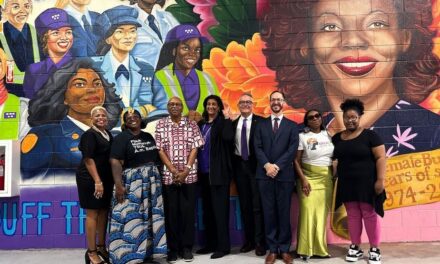
Now the BVAAM stands in what was Bryan’s Lower Freedman Town, serving as a physical symbol of African American history, a history that isn’t always represented.
“Most of the history in the black community is oral. With the museum, [you] have a written history of Bryan-Brazos County so that young and old will be aware of what has transpired in this community,” Madison added. “If you don’t have these things written, so that everyone is aware of what has occurred, to a certain degree [what happened back then] may be occurring today.”
Copyright 2026 KBTX. All rights reserved.